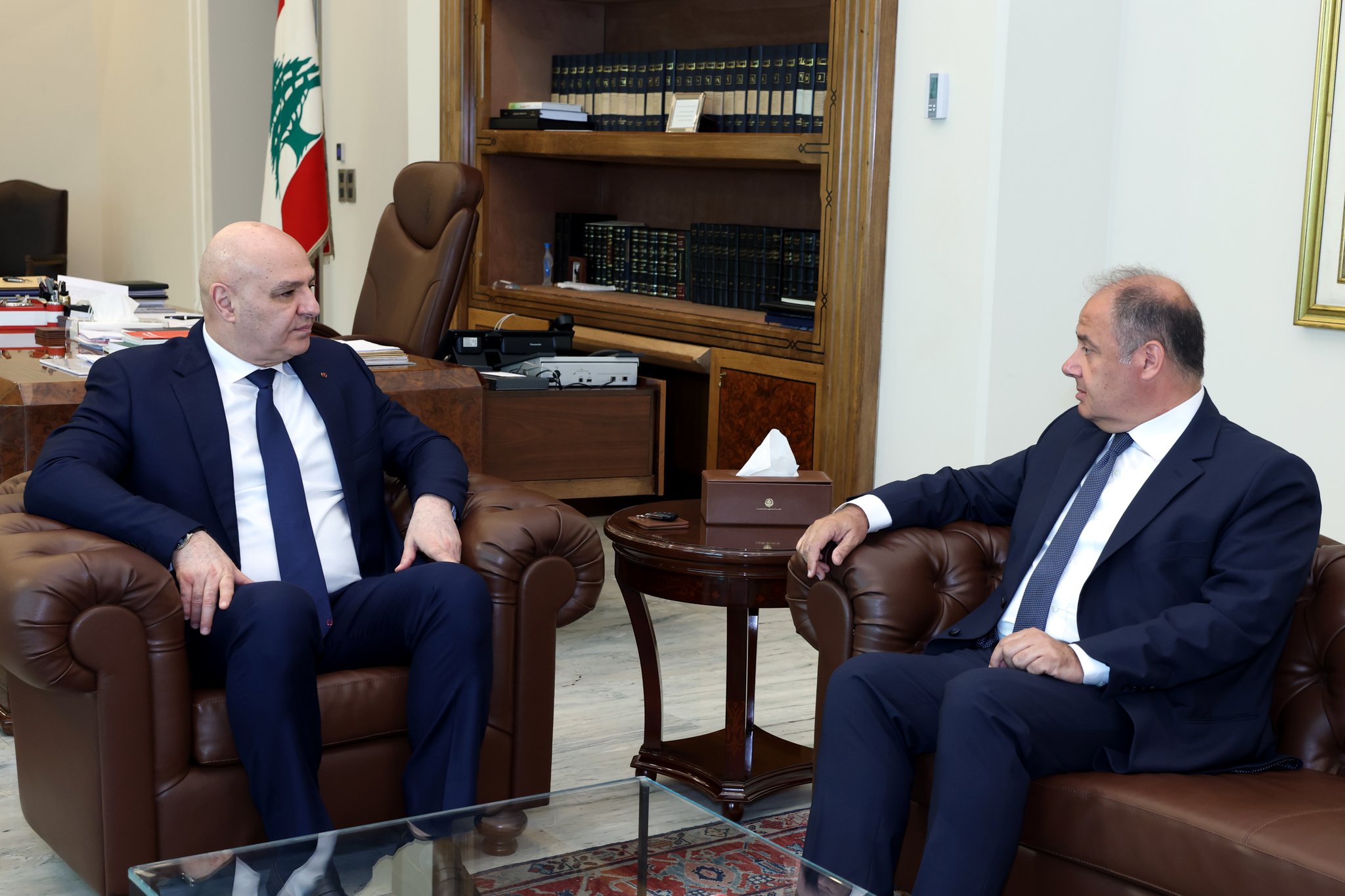
President Joseph Aoun affirmed his continued efforts to reopen Arab markets, particularly in the Gulf, to Lebanese products. He stressed the necessity of restoring confidence in Lebanon and the importance of reform "that begins from within, not from abroad." He expressed hope that "the current crisis will end, along with the suffering of the Lebanese people, especially our people in the South, so that Lebanon can be put back on the right track." President Aoun's remarks came during his meeting at Baabda Palace with the members of the General Assembly of the Economic, Social, and Environmental Council, following the issuance of the decree appointing them.
In his address, Council President Charles Arbid stated, "We are here, as an economic, social, and environmental council, to help pave the way for stability in Lebanon on economic, social, environmental, and, most importantly, national levels. This will unite us as one people striving towards a common goal that serves our collective interest." He emphasized that "Lebanon is one and indivisible homeland for all of us, with one state, unified institutions, and a single security force guaranteeing the country's security, resources, and interests. Together, we aspire to reach the point of success, the shores of salvation, and the haven of national tranquility."
He further noted that "the Lebanese people are not only waiting for a solution to the severe financial and economic crisis, but also for the restoration of the true meaning of the state, equal opportunities, and a dignified life. Today, their only recourse is to rely on the activation of constitutional institutions as a natural entry point for restoring internal and external confidence and building opportunities. We are facing a trust that must be rebuilt and opportunities that must be seized if we are to fulfill our responsibilities and obligations."
He emphasized that "the voice of responsibility is the national and economic lifeline in moments of security breakdown, existential fear, heightened anxieties, and the clamor of provocative voices and crisis-ridden ideas. This voice, emanating from Baabda Palace today, re-illuminates the path toward overcoming all that surrounds us, as one people with one army and one capable and sovereign state, through a national decision where no group feels its interests are more important than another's."
He added: "Lebanon today needs a new socio-economic contract that redefines a unified national identity as a core of belonging to which everyone adheres. This can only be achieved by establishing political and security stability, which then translates into economic, social, and living standards stability. A contract in which the reform process becomes a sustainable building process led by the state and shared with the forces of the economy and society."