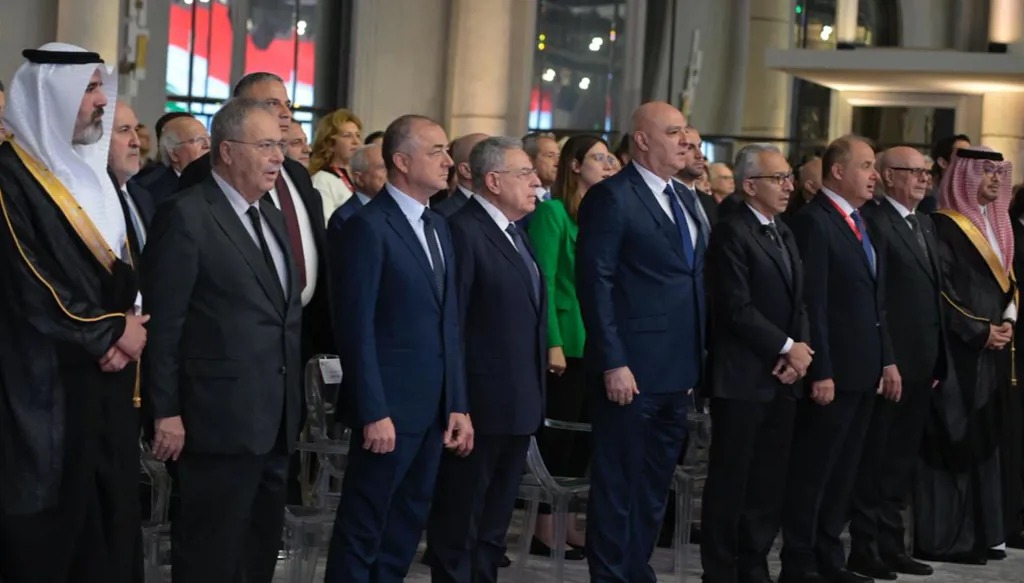
Minister of Finance Yassine Jaber announced that Lebanon is expected to achieve a “very strong fiscal surplus” in early 2026 based on the draft budget submitted to Parliament, which he said will positively impact the country’s economic outlook.
He emphasized Lebanon’s early adoption of public–private partnerships (PPP) and announced plans to restructure the electricity sector into three segments with private-sector involvement. He also highlighted potential cooperation with local and Arab partners, including a project to import gas to reduce electricity costs and pollution.
Jaber stressed that there is no economy without banks, making banking sector reform a top priority.
The World Bank Vice President for MENA Ousmane Dione praised Lebanon’s initiative, saying the country can recover quickly if it implements concrete reforms. He emphasized the importance of a predictable environment, rule of law, and banking reform, reaffirming the World Bank’s readiness to support Lebanon.
Minister of Economy Amer Bsat presented an ambitious national plan aiming to double GDP by 2035, increase exports significantly, raise investments, and eliminate poverty by 2030, requiring around $74 billion in investment over 10 years.
The Arab Fund representative confirmed continued support for Lebanon and the importance of cooperation with international institutions.
Central Bank Governor Krikor Said (Karam/Krim Said as mentioned in text) stated that Lebanon is rebuilding its economic structure and working toward financial stability and currency stabilization. He stressed that banking reform is essential, including recapitalization and deposit recovery.
He emphasized shifting from a rent-based economy to a productive one and strengthening governance in the banking sector.
International investor James Baz (PIMCO) stressed the importance of fighting corruption and limiting political control over state decisions.
Energy expert Salim Samaha highlighted that Lebanon’s recovery depends heavily on electricity sector reform and transparency.
Ray Dabbane emphasized economic activation and stabilization.
Health Minister Rakan Nassereddine highlighted investments in public hospitals and cooperation with international financial institutions to upgrade Lebanon’s healthcare system.
Agriculture Minister Nizar Hani announced a major agricultural investment conference planned for 2026 and emphasized agriculture’s role in food security and employment.
Agriculture represents 9% of GDP and is showing growth despite climate challenges.
Egypt’s Minister of Supply Sherif Farouk praised Lebanon’s human capital and investment potential.
Hotel executive Nasser Al Nuaimi said Lebanon needs stability to recover and praised its financial and tax systems.
Social Affairs Minister Haneen Sayed stressed the importance of social protection with economic impact.
Business leader Mohammed Choucair highlighted improved investor confidence and ongoing reforms, noting that Lebanon is moving toward institutional rebuilding.
International banker Samir Assaf emphasized that implementation is more important than plans and expressed cautious optimism about Lebanon’s potential.
Head of the Council for Development and Reconstruction Mohammad Kabani announced a five-year infrastructure plan and cooperation with the World Bank.
Energy Minister Joe Saddi outlined electricity sector reforms.
Economic strategist George Chahadeh also presented economic insights.
UAE Minister Noura Al Kaabi highlighted the UAE’s development experience and post-COVID recovery strategies.
Producer Sadiq Al-Sabah emphasized the importance of Lebanese drama and creative industry investment.
Additional contributions came from Culture Minister Ghassan Salamé, journalist Rima Abdel-Malik, and architect Bernard Khoury, focusing on the creative economy and cultural industries.