
Joseph Aoun emphasized that “we do not build the future when storms calm down, but rather we create calm through building,” stressing that “a state that holds its officials accountable and protects its resources is a state capable of protecting both the investor and the citizen.”
He reaffirmed Lebanon’s openness to its Arab and international environment, noting that Lebanon must regain its natural role as an economic and cultural actor in the region, a bridge between East and West, and a platform for cooperation between companies, investors, and development institutions.
He added that this openness is not a slogan but a real direction toward new partnerships, regional markets, and strengthening Lebanon’s position on the regional and international business map.
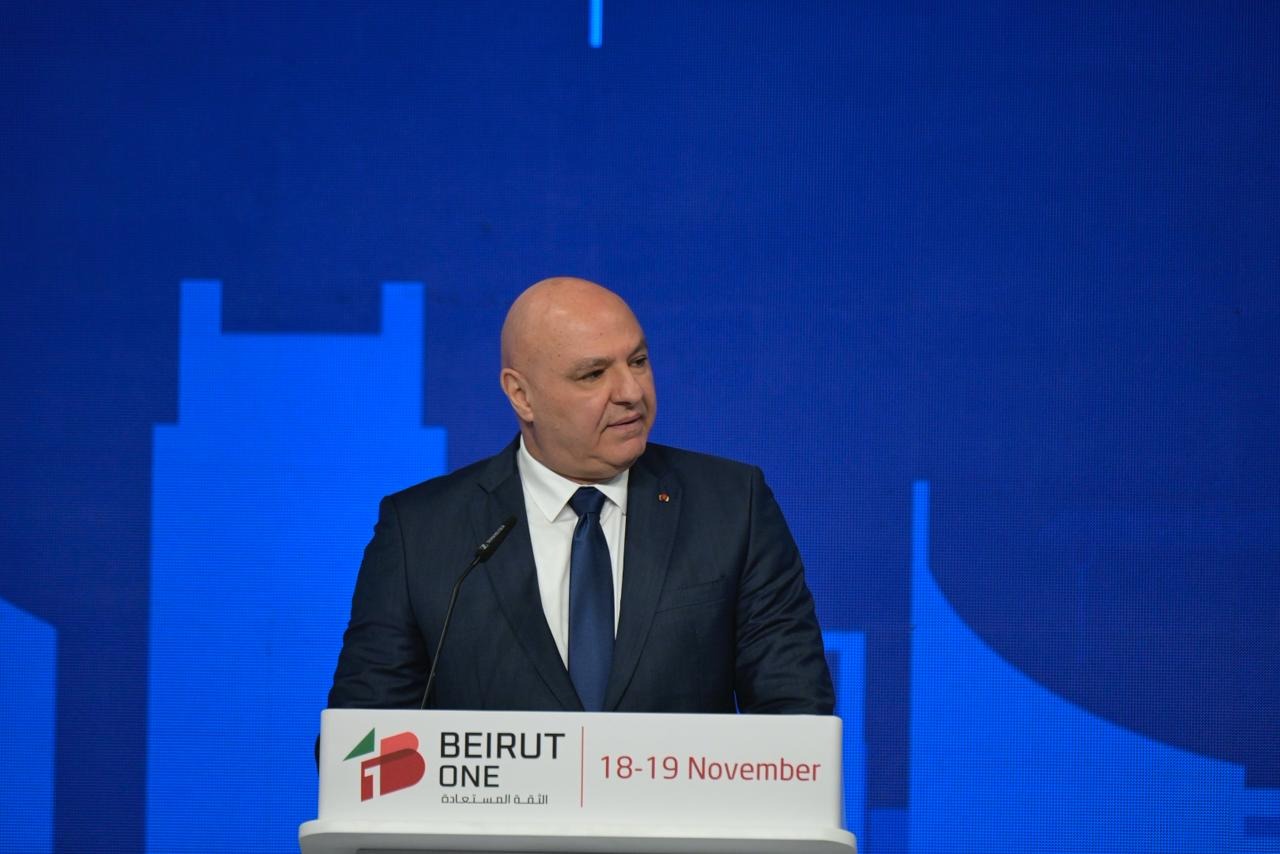
The President delivered these remarks during his attendance at the opening of the “Beirut One” conference, titled “Beirut rises again,” held at the Seaside Pavilion on Beirut’s waterfront, with the participation of ministers, MPs, ambassadors, economic and labor leaders, and investors aiming to support Lebanon’s recovery and development phase.
The conference opened with the national anthem, followed by remarks from the President of the Economic and Social Council Charles Arbid, then a speech by Minister of Economy Amer Bsat, before President Aoun addressed the audience.
In his speech, he described the conference as more than an economic event, calling it “the beginning of a new chapter for Lebanon, defined by trust, partnership, and opportunity.”
He stated that holding an investment conference amid security, economic, and political challenges is a legitimate question, but the answer is clear: Lebanon builds stability through action, not by waiting for calm conditions. He stressed that despair does not rebuild, and silence does not create trust—only actions change the course.
He highlighted that Lebanon has already begun real reform steps, including transparency and accountability laws, strengthening institutions, and prioritizing merit over favoritism. He also emphasized reinforcing oversight bodies, arguing that a state that protects its resources is one that can protect both investors and citizens.
He reaffirmed Lebanon’s commitment to openness, restoring its regional role, and positioning itself as a platform for economic cooperation and international partnerships. He also stressed that this openness is a practical policy direction, not a slogan.
Aoun underscored ongoing efforts to ensure internal security, stressing that investor protection must be based on the rule of law, not political fluctuations, and that the goal is sustainable stability rather than temporary calm.
He acknowledged that reforms face internal resistance because they challenge entrenched interests, but confirmed that the government will continue its path.
He presented a vision of growth based on partnership between the public and private sectors, where the state enables and regulates while the private sector leads implementation, innovation, and job creation.
He described Lebanon’s envisioned future as an open and ambitious investment platform, built on its strategic location, human capital, and diverse opportunities. He also referenced the broader national economic vision led by the Ministry of Economy, the Economic and Social Council, and the government.
He concluded by calling on friends of Lebanon, investors, and partners to engage based on trust rather than aid, presenting Lebanon as an opportunity rather than a request for assistance.
He also warmly welcomed Saudi participation in the conference and expressed appreciation for the presence of the new U.S. ambassador Michel Issa, viewing it as a positive signal of continued international support.



